
New SGeT oHFM™ Specification for FPGA-based SoMs Features Samtec Interconnects
Embedded World 2026 was recently held in Germany. EW26 is an annual event that is the center of the embedded computing ecosystem. Semiconductor providers, SoM/CoM vendors, distributors, interconnect companies and more convene to educate, network and promote the latest solutions that will define next get embedded solutions.
Additionally, industry-standard bodies like PICMG®, PC/104 Consortium, and SGeT are also present. These organizations represent various consortiums of companies that collaboratively develop a diverse set of open standards for high-performance embedded computing applications.
What was the latest new from ew26?
SGeT oHFM – What is it?
Originally announced in 2024, the SGeT Open Harmonized FPGA Module is the world’s first open standard specifically designed for FPGA and SOC-FPGA modules.

Engineers who are experienced FPGA users realize that there are mainly three types of FPGAs and SoC-FPGAs: low-range, mid-range, and high-end.
The variety of FPGA solutions share common interfaces and protocols. On the other hand, as FPGA performance scales, higher-end devices require more power, memory and support circuitry. SGeT oHFM tackles these unique challenges by proposing two types of SoM.
For low – to mid-range devices, solderable modules based on the SGeT OSM standard offer ease of assembly and small form factors. For higher-end FPGAs, connector-based modules allow for large form factors, increased logic and high-speed SerDes.
Solderable Open Harmonized FPGA Modules
As stated, the Open Harmonized FPGA Modules (oHFM.s) will accommodate FPGAs and SoC-FPGAs from the low end to the lower mid-range devices. oHFM.s modules will utilize Solder-on-Module technology championed in the OSM standard. This approach leverages the advantages of solderable BGA processes. Soldering, assembly, and testing are simplified via directly soldering the SoM to the carrier PCB.
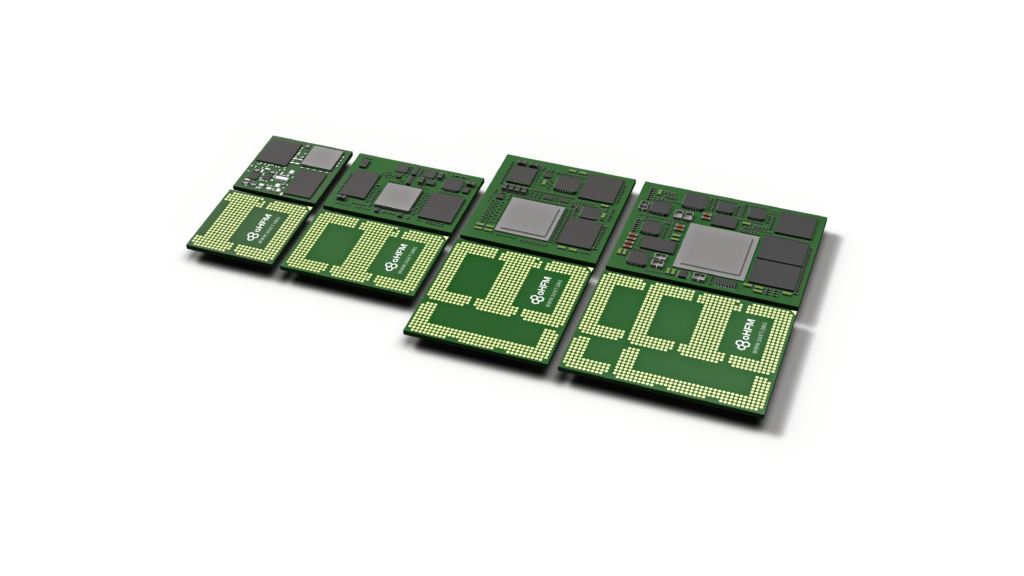
For oHFM.s modules, the BGA approach allows for the implementation of significantly more interfaces on a smaller footprint. It also enables reliability and security, improved signal integrity, space efficiency, and simplified manufacturing.
Connector-based Open Harmonized FPGA Modules
Connector-based Open Harmonized FPGA Modules (oHFM.c) will enable support for mid to high-mid-range FPGAs and SOC-FPGAs. o.HFMc modules will support increased I/O counts, larger form factors, and higher speeds. They will use high-speed board-to-board connectors between the SoMs and the carrier cards.
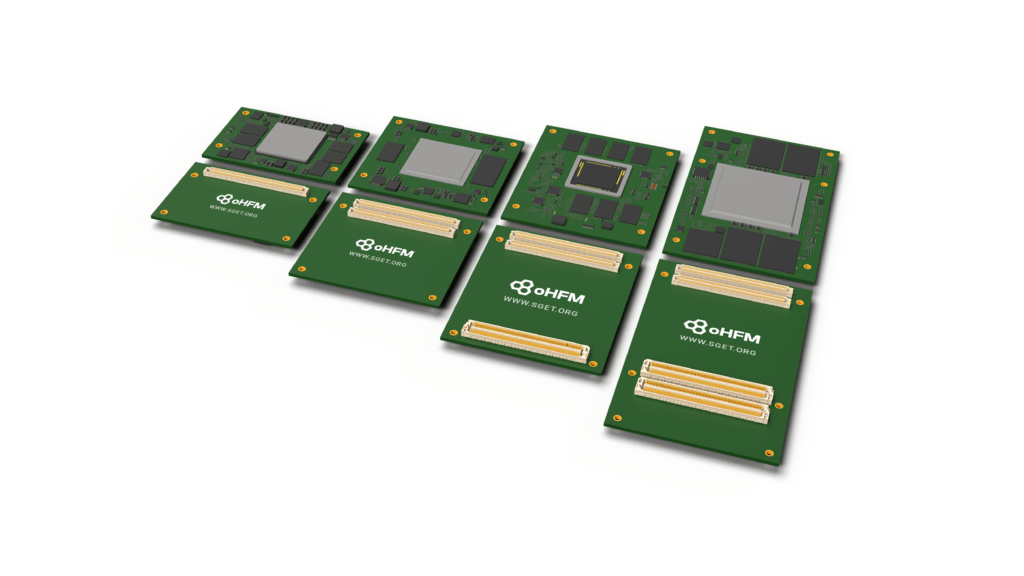
Samtec offers the largest variety of high-speed board-to-board and backplane interconnects in the industry. This is backed up with full engineering support, online tools and an unmatched service attitude. One product example is the number of high density array connectors available from Samtec. These solutions feature a variety of pitches, stack heights, and configurations for maximum routing, grounding, and design flexibility.
AcceleRate® HP High-Performance Arrays feature a 0.635 mm pitch offering 112 Gbps PAM4 extreme performance and a flexible open-pin-field design.
AcceleRate® HD Ultra-Dense Slim Body Arrays also feature a 0.635 mm pitch in a slim 5.0 mm width. Stack heights at slim as 5.00 mm are available. Additionally, they include up to 400 high-speed Edge Rate® contacts. The surface of the contact is milled, creating a smooth mating surface. This reduces wear on the contact, increasing durability and cycle life. Also, lower insertion and withdrawal forces allow zippered unmating.

SGeT HFM Solutions at ew2026
At ew26 solution providers, including iWave Global, announced new standard FPGA modules targeting oHFM.s and oHFM.c applications. Samples of the new SoMs are now available
Additionally, the process of developing the SGeT oHFM standard is ongoing. Participation is open to current and future SGeT members.
EDITOR”S NOTE: This blog was updated in April 2026 to reflect the latest status of the SGET oHFM specification.
