
Sea to Shining Sea
I have had the privilege of writing Samtec’s Independence Day blog for several years now, despite being British. It has become one of my favourite traditions, and it comes with a certain responsibility, especially this year as the United States celebrates its 250th anniversary.
Looking at the United States from the outside, one of the things that has always fascinated me is its scale. The phrase “from sea to shining sea” captures the vastness of the United States, but it also reveals one of the country’s greatest challenges. Stretching thousands of miles from the Atlantic to the Pacific, the United States has always had to find ways to overcome distance. The nation that declared its independence in 1776 has sought ever faster ways to move people, goods and, perhaps most importantly, information.
Defining the Speed Limit
For much of history, communication had a very definite speed limit. In 1776, news travelled no faster than the horse carrying it. A message from Philadelphia to a distant frontier settlement might take days or even weeks to arrive. The speed of communication was measured in miles per day, and governments, businesses and families all had to work within that limitation. As the young nation expanded westward, the challenge only became greater.
The stagecoach and, later, the Pony Express became symbols of a country determined to stay connected despite its enormous size. While the Pony Express operated for only a short period, it demonstrated something that would become a recurring theme throughout American history. Faced with a seemingly impossible geographical challenge, Americans built a solution.
The electric telegraph changed the world forever. It separated information from transportation. Messages no longer needed to travel physically across the continent. Instead, they could be transmitted almost instantaneously along wires stretching for thousands of miles. For the first time, information no longer travelled at the speed of transportation, but at the speed of communication.
The speed limit had changed. It is a pattern that has repeated itself many times since. Railroads transformed travel across the continent. Telephones made conversations possible over enormous distances. Radio connected communities, and later television allowed millions of Americans to share the same moments together.
Simple Solutions
One of my favourite examples comes from the early days of aviation. Flying across America was challenging enough. Doing so at night was something else entirely. Rather than waiting for aircraft technology to improve, engineers developed the Transcontinental Airway System. Hundreds of ground markers and illuminated beacons were constructed across the country, each visible from the next, guiding pilots safely from coast to coast. Supported by emergency landing fields and weather stations, this remarkable network allowed aircraft to continue flying throughout the day and long after the sun had set.
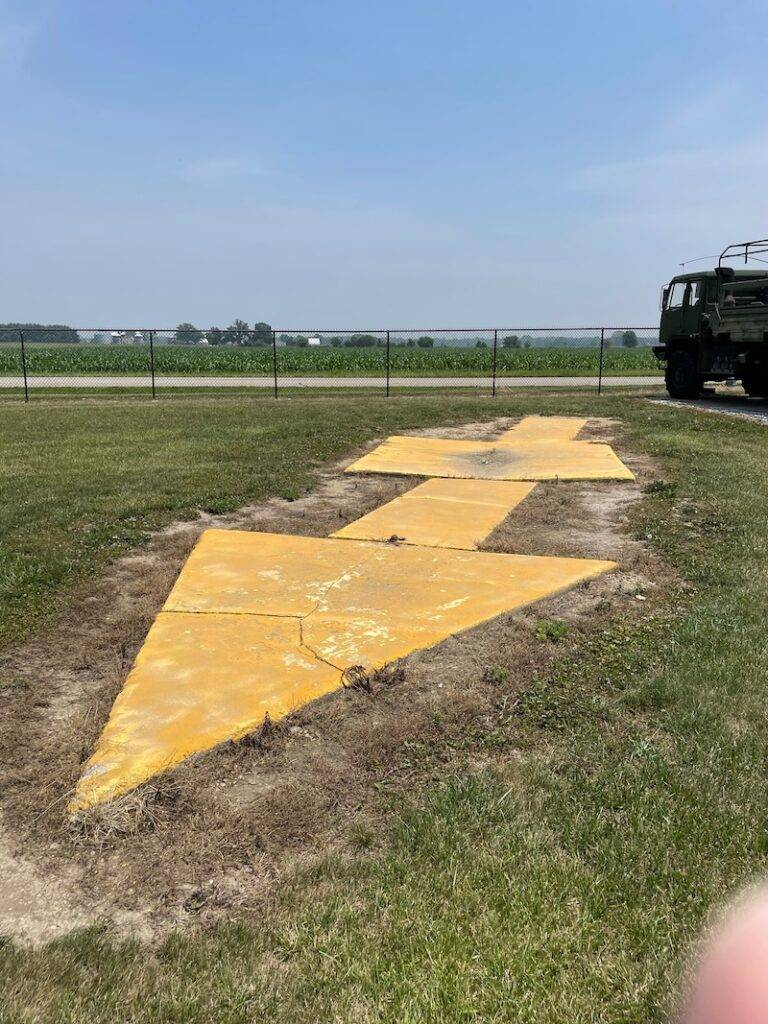
Like many great engineering achievements, it quietly faded into history once something better came along. Radio navigation eventually made the beacons obsolete, but for a brief period they represented another ingenious solution to the challenge of bringing a vast nation closer together.
Today, the challenge remains the same, but the technology has changed beyond recognition. Instead of measuring communication in miles per day or miles per hour, we measure it in gigabits per second. Video calls allow families separated by thousands of miles to share birthdays and celebrations as though they were in the same room. Businesses collaborate across multiple time zones in real time. Engineers work together on opposite sides of the continent without giving a second thought to the distance between them.
As someone who spends much of his time writing about connectors and high-speed communications, I often describe history as a series of changing speed limits. Each generation reached the limits of what was possible and then found an entirely new way forward. Today’s high-speed interconnects enable data to move at extraordinary speeds, supporting everything from cloud computing and artificial intelligence to the video calls that allow us to stay connected wherever we happen to be.
Bringing People Together
Throughout its history, Samtec has been proud to support many of the industries that have helped overcome the challenge of distance. Whether in transportation, aerospace, telecommunications, or today’s high-performance computing infrastructure, the goal has remained remarkably consistent: helping people communicate faster, more reliably and across greater distances than ever before.
Two hundred and fifty years after the Declaration of Independence, the geography of the United States has not changed. It still stretches from sea to shining sea. What has changed is humanity’s ability to connect across that distance.
That achievement belongs to generations of innovators, engineers and pioneers who refused to accept geography as a limitation and instead found new ways to bring a vast nation closer together.
So, from one grateful Brit, and on behalf of your friends, colleagues, customers and suppliers around the world, congratulations on this remarkable milestone. Happy 250th Independence Day, from all of us at Samtec.
