
New COM-HPC® 1.3 Specification Drives Performance Forward
I like fast cars. Each new car I buy seems to have more horsepower. More speed isn’t needed when driving to the grocery store, but it’s nice to have when passing the overburdened minivan in front of you.
In a similar vein, the updated COM-HPC 1.3 specification from PICMG offers a pathway to increased throughput for embedded computing applications. The latest revision also supports design flexibility, scalability, and efficiency, and helps overcome throughput, memory constraints, and latency concerns common in edge AI and other high-performance embedded applications.

So, how does the COM-HPC 1.3 specification add horsepower? Let’s find out!
Support for PCIe® 6.0/CXL® 3.x
The COM-HPC 1.3 update drives advanced throughput capabilities. When the original COM-HPC spec was released, PCIe® 5.0 technology (32 GT/s) was the industry standard. Five years later, native PCIe 6.0 technology (64 GT/s PAM4) support is common in multiple embedded computing platforms.
COM-HPC connectors have always been capable of PCIe 6.0 throughput (and beyond). However, those capabilities are now codified in the updated specification. COM-HPC PCIe 6.0 signal channels – including trace lengths on SoMs and carriers – have been defined, simulated, and tested based on PCI-SIG PCIe 6.0 loss profiles.
Adding PCIe 6.0 capabilities in COM-HPC client and server form factors opens up support for Compute Express Link® (CXL®) technology. CXL 3.x enables memory coherency and expansion, resource pooling, and improved performance for accelerated applications over the PCIe interface.
New Solder Column Connector Options
Originally, COM-HPC connectors used traditional BGA-style solder ball terminations. However, ongoing innovation shows that newer solder column terminations provide many benefits compared to solder ball terminations. So, the COM-HPC 1.3 specification includes new connector options that use the new termination technology.

Solder column board termination is ideal for dense, high-speed interconnects like COM-HPC. This new technique is fully compatible with existing PCB footprints, but a larger rectangular stencil aperture is required to ensure optimal soldering results. Other advantages include:
- Consistent, reliable solder joints for long-term durability
- Large post design for proper fillet thickness and a generous wettable surface area, enhancing solder joint reliability
- Successfully tested Solder Joint Reliability per IPC-9701 (-55˚C to +125˚C)
- Seamless drop-in compatibility with existing layouts, ensuring a smooth transition with minimal disruption
- Greater production flexibility to support cost-effective manufacturing
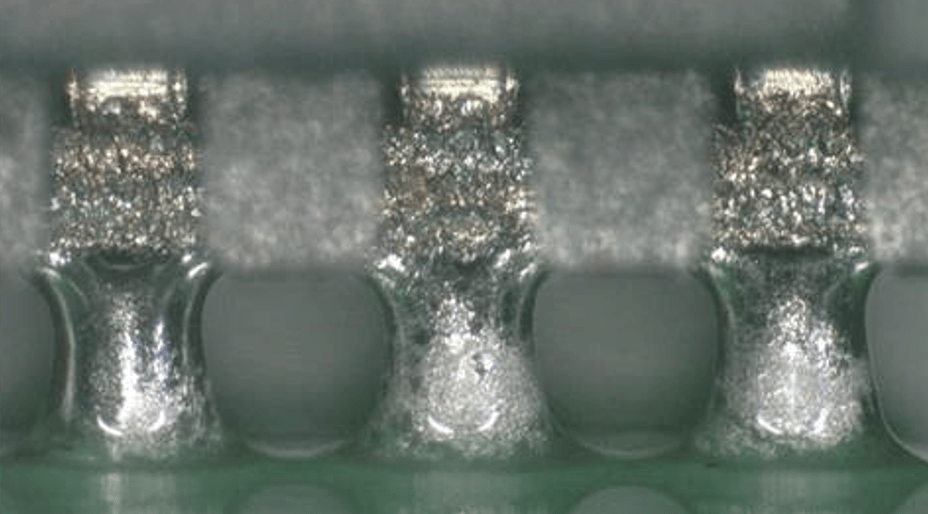
Additional details and benefits of this change to solder column termination are outlined in the white paper below.
Additional COM-HPC 1.3 Updates
Samtec is a connector company first and foremost, so we always look at standards from that perspective. Yet, the new COM-HPC 1.3 updates also include several enhancements that expand the functionality for the COM-HPC ecosystem.
Expanded I/O: Additional I2S interfaces have been defined for improved audio implementations. SMBus can also be used as additional I2C interfaces. Also, GPIOs can be assigned to monitor system status or control external devices.
Increased Multimedia Functionality: Two changes were made here to enhance support for camera and vision applications. One, support for C-PHY on MIPI-CSI was added. Secondly, an additional clock input supports the connection of 2×2 camera configurations for D-PHY.
Increased Energy Efficiency: The latest COM-HPC 1.3 revision now supports Modern Standby (S0ix). COM-HPC modules can better support energy-efficient operating modes. Clock inputs can now be configured as clock outputs. PCIe clock request signals are now bidirectional, allowing for improved power management.
As you can see, a lot of work went into the new COM-HPC 1.3 revision. It has more horsepower than ever before, and it’s just waiting to be used!
