
Connecting Test and Measurement
Test and measurement (T&M) systems are essential to modern technology. Whether certifying a 5G chipset, calibrating a new antenna array, or debugging a PCIe interface, the need to capture the most accurate data possible remains the same.

Connectors are essential to ensuring the accuracy of any testing process. In today’s high-speed, high-frequency world, any measurement is only as good as the quality of the signal path that carries it. That signal path depends on the connector.
The test and measurement landscape has evolved constantly in recent years. With some equipment now using frequencies beyond 100 GHz, the connector interfaces are more complex and compact. Connectors must support higher bandwidths, without compromising signal quality, and maximizing system capabilities requires greater channel density. At the same time, the mechanical performance of any connector is still of paramount importance to survive constant use in the lab or field
Connectors designed for test applications are arguably the most important in the entire world of electronics. Their role in validating and proving new designs means that accuracy is essential. Characteristics such as impedance control, insertion loss, and low crosstalk are critical, especially when working at gigahertz frequencies. Even the smallest mismatch can distort results or trigger false failures in the device under test (DUT).
The testing environment also places some of the greatest demands on mechanical reliability. Many testing facilities and laboratories are reconfigured daily as the requirements of their work dictate. Connectors must withstand hundreds or even thousands of mating cycles without a drop in their performance. Reliability over long periods is just as important as when the connector is new.
Testing facilities often demand modularity and customization. Engineers need solutions that fit their unique circumstances, not one-size-fits-all options. Whether it’s custom-length cable assemblies, ruggedized contacts, or hybrid digital-optical links, flexibility is key.
In the world of test and measurement connectors, there is no “one-plug-to-rule-them-all.” Each application brings its own set of requirements. RF and microwave testing demands precision RF connectors that maintain consistent phase and impedance characteristics, often beyond 50 GHz. High-speed digital testing, such as DDR memory or SerDes validation, requires connectors that can transmit signals with minimal loss across wide bandwidths. Even within a single test, engineers may need to combine digital, RF, and even optical signals, requiring a blend of connector types, each tailored to their specific role.
Samtec Solutions
Samtec customers have come to depend on our connectors for test and measurement applications. At high frequencies, Samtec’s Bulls Eye® offers precision RF performance up to 110 GHz, ideal for demanding mmWave applications. Their small footprint and high-density layout make them well-suited for the laboratory and automated test systems.
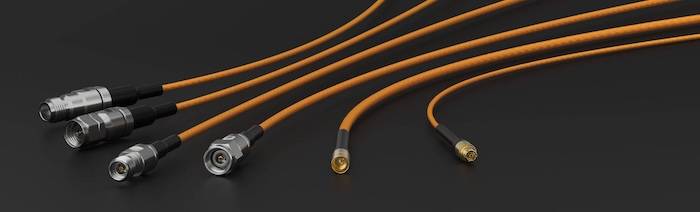
For digital test environments, products like AcceleRate® HD and NovaRay® provide low-loss, high-speed performance in rugged, compact formats, supporting data rates of 56 Gbps and beyond.
In EMI-sensitive applications, FireFly™ optical interconnects provide an elegant solution for high-throughput data links while reducing noise coupling and parasitic effects. These systems are ideal for maintaining clean measurement paths in densely packed environments.
To learn more about how Samtec products are ideal for the most exacting test and measurement applications, visit the test and measurement applications page. You can also download the Test Connectivity Solutions Guide.
