
Have It Your Way: Cut-to-Position Connector Solutions
I’m old enough to remember the “Have It Your Way” Burger King commercials that subtly attacked McDonald’s pre-cooked (and therefore not-as-fresh) sandwiches. The point was obviously to order the sandwich anyway that you want, and we’ll gladly prepare it that way for you, quickly.
Believe it or not, this relates to connectors. Let me try to explain:
Selecting the right board-level connector can be a confusing process. Unless you have a specialized application — a specific power requirement, an extremely high operating temperature, a cutting-edge bandwidth, an industry-specific performance standard to adhere to — the choice can be overwhelming.
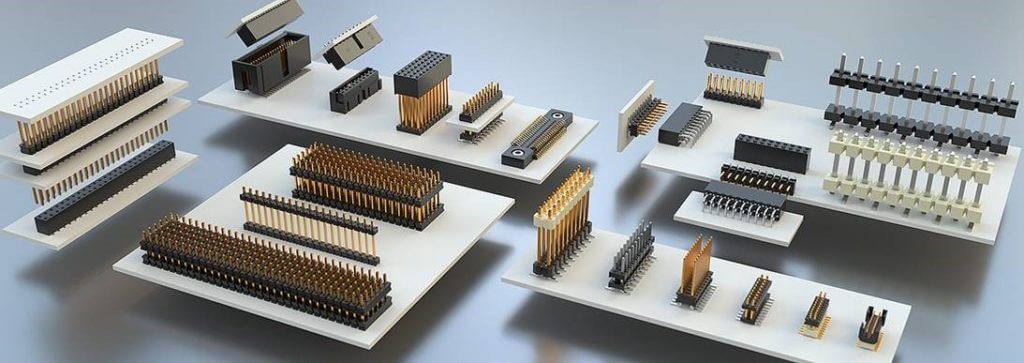
But if you are one of those (lucky) designers whose board-to-board connector requirements are relatively simple and straightforward, don’t overlook old-school, two-piece, cut-to-position connectors: terminal (“headers”) and socket strips. The simplicity of connector design affords you many potential benefits. In other words, you can have it your way.
ANY NUMBER OF PINS
First, since these are cut-to-position connectors, you should be able to purchase just about any number of pins, even if it’s an odd pin count. Using Samtec as an example, many of our full-strip plastic bodies are 50-position, so a designer can order literally any number of pins per row, from one to 50.
While most of our sales are for industry-standard sizes (10, 34, 40, 50 pins), if a designer needs something unusual, such as 44 pins, they do not have to order a 50-pin connector. The benefits add up: it’s less expensive, it saves space on the PCB, there’s less processing, and less inventory, among other advantages.
And, chances are, your order will ship in one day, thanks to the Samtec Reserve® program.
SINGLE, DOUBLE, TRIPLE, UP TO FOUR ROWS
Since the plastic bodies of full-strip, cut-to-order connectors are inexpensive, they are easier to stock and are more likely to be available in other design configurations. For example, many connector manufacturers offer both single and double-row full-strip connectors, and a few offer three and four-row (and more) designs.
Again, this allows for greater design flexibility, enabling the connector configuration to be optimized for the specific design requirements. For example, a designer may need a 15-position terminal strip, and the PCB layout is best served by a three-row connector with 5 pins per row. That option is available, rather than having to use a 2×8 terminal strip.

TERMINAL AND SOCKET STRIPS
Full-strip, cut-to-position connectors are available in both terminal (male) and socket (receptacle, female) connector strips.
Again, due to the inherently lower-cost design, connector manufacturers can offer a variety of socket strip connectors with contacts designed to meet the cost and performance requirements of the application.
Using Samtec as an example (this is a Samtec blog), socket strips are available with contacts designed for rugged/high-cycle, pass-through, inexpensive, and high-retention applications. Here’s a link if you’d like to learn more about selecting the right contact for your board-to-board interconnect system.
WHAT ABOUT POLARIZATION?
That’s a legit question. Polarization is important. Since the plastic bodies of full-strip, cut-to-position connectors do not have polarization keys or shrouds, how can I polarize the mating connector set?
Designers can specify that both the terminal and socket strip be polarized. Polarization is an option in the part number. Specify the pin number in the “Polarizing Option” callout. The corresponding pin is removed from the body on the terminal strip, and the contact on the socket strip is filled with a plastic polarization key.
The two connectors will not plug into each other (i.e., they are polarized).
HOW DO I GET STARTED?
Samtec’s Solutionator® Flex Stacking tool is an online connector search tool that provides you with the mated connector set that meets your connector board stacking design requirements. Let me say that again – the tool gives complete part numbers of the two mating connectors that meet your design specifications.
Almost every other connector search on the planet leads you to one connector, and then you still have to search to find the other half of the mated set. In other words, you have to do at least two searches. And after these two searches, you still have to figure out the stack height of the mating connector system.
And that can be, putting it mildly, a major hassle. With the Solutionator tool, you can (literally) locate the best mated connector set for your board stacking application in seconds.
Here’s a link if you want to learn more about Samtec Flex Stacking connector solutions.
